

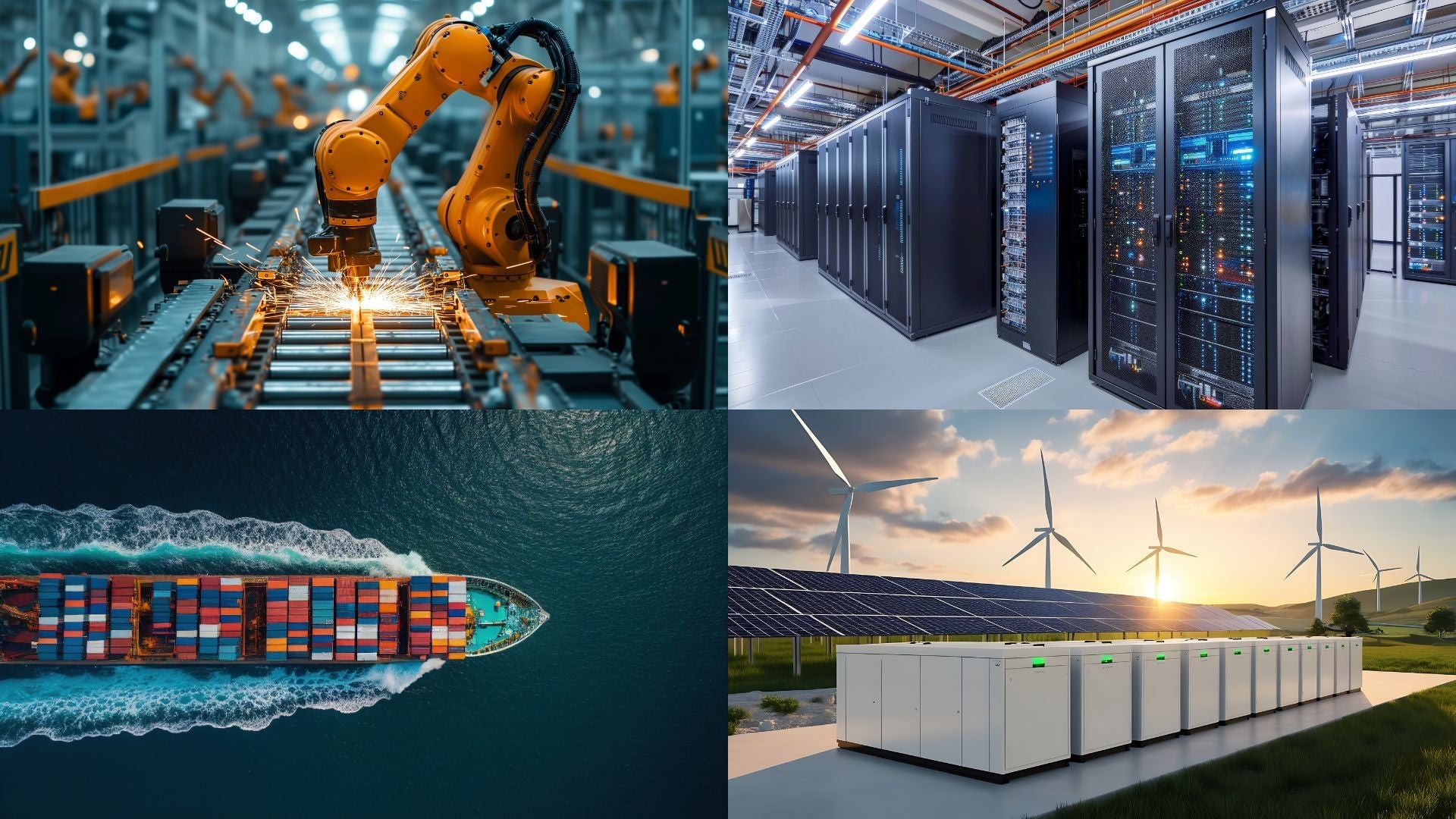
Commercial, industrial, and digital infrastructure refers to the physical and technological systems that support economic activity, production, and connectivity in modern society. Together, these systems form the backbone of how communities operate, businesses grow, and industries compete.
I. Commercial Infrastructure
Commercial infrastructure includes buildings and developments that support business activity and public interaction. Examples include office towers, mixed-use developments, sports and entertainment districts, healthcare facilities, hotels, and retail centers.
These projects generate economic activity by attracting investment, creating jobs, and expanding local tax bases. Large commercial developments often stimulate surrounding neighborhoods by increasing demand for small businesses, services, and transportation access. Construction alone supports millions of jobs nationwide, while long-term operations create roles in management, hospitality, technology, and security.
II. Industrial Infrastructure
Industrial infrastructure supports the production, storage, and movement of goods. It includes ports, maritime terminals, rail networks, manufacturing plants, warehouses, distribution centers, freight corridors, and energy facilities.
These systems power supply chains and global trade. Ports connect international markets. Logistics hubs distribute products across regions. Manufacturing facilities produce goods essential to everyday life. Infrastructure and construction sectors employ millions of workers, from skilled tradespeople and engineers to logistics managers and energy technicians.
As domestic manufacturing and supply chain resilience become national priorities, industrial infrastructure continues to expand and modernize, creating strong workforce demand in technical and trade-based careers.
III. Digital Infrastructure
Digital infrastructure includes broadband networks, fiber optic systems, data centers, cloud computing facilities, wireless towers, cybersecurity frameworks, and smart grid technologies.
In today’s economy, digital systems are as essential as roads and power lines. High-speed internet enables remote work, online commerce, telemedicine, and digital education. Data centers power financial markets, artificial intelligence platforms, and advanced manufacturing systems. Cybersecurity protects critical systems and economic activity.
Investment in broadband and digital systems is accelerating nationwide, creating jobs in installation, engineering, cybersecurity, and network management.
Why It Matters
Together, commercial, industrial, and digital infrastructure projects drive economic growth, workforce development, and long-term competitiveness. They attract capital, strengthen supply chains, create employment opportunities, and support innovation.
Infrastructure is more than construction. It is the integrated system that powers economic participation, connects communities, and enables opportunity at scale.








Share: