

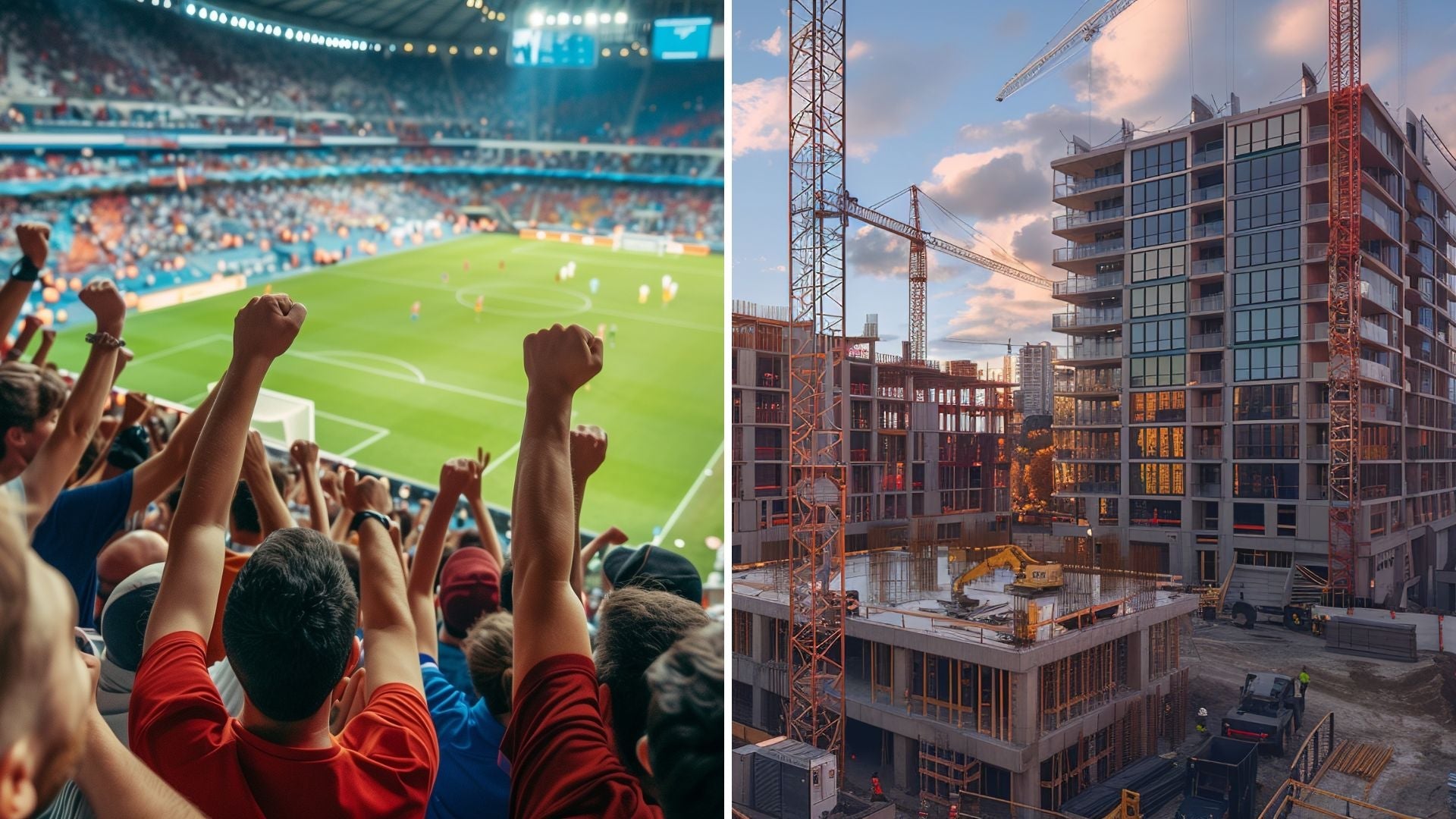
Summer of Sports + Infrastructure is more than an event series. It is a data-backed bridge between two of the most influential sectors in the U.S. economy: sports and infrastructure.
The sports industry generates more than $500 billion dollars annually in economic activity across media, facilities, sponsorship, youth participation, and live events. At the same time, federal and state infrastructure investment has surged following the Infrastructure Investment and Jobs Act, which allocates over $1.2 trillion dollars toward transportation, broadband, energy, ports, water systems, and grid modernization. Together, these sectors represent trillions in capital flow, workforce demand, and community impact.

The challenge is alignment.
Infrastructure projects require large-scale supply chains, skilled labor pipelines, compliance tracking, and local participation frameworks. According to the U.S. Bureau of Labor Statistics, construction and infrastructure-related occupations are projected to add hundreds of thousands of new roles this decade, particularly in trades, engineering, logistics, and project management. Meanwhile, youth sports participation in the United States exceeds 60 million athletes annually, producing disciplined, team-oriented talent often searching for structured career pathways.
Summer of Sports + Infrastructure connects these dots in real time.
Supply chains supporting infrastructure projects rely heavily on small and midsize businesses. Data from the U.S. Small Business Administration shows that small firms make up 99 percent of U.S. businesses and are critical participants in government procurement and subcontracting. By educating sports communities about how procurement, vendor qualification, and workforce certification function, the series expands awareness of economic entry points beyond traditional employment.
Workforce development is equally critical. Infrastructure investment increasingly requires credentialed talent in energy systems, advanced manufacturing, cybersecurity, broadband installation, and maritime logistics. Community colleges, trade schools, and universities are scaling programs to meet this demand, yet awareness gaps persist. By leveraging sports networks such as teams, leagues, alumni associations, and youth programs, the initiative introduces infrastructure careers to audiences already organized around discipline and performance.
Community investment data reinforces the case. Large infrastructure projects often include community benefit agreements, local hiring targets, and supplier diversity goals. When local communities understand how to engage, they are more likely to capture long-term economic value rather than short-term activity.
Why Sports + Infrastructure?
Sports already operate as a high-performance ecosystem built on teamwork, systems thinking, measurable outcomes, and leadership under pressure. Those same characteristics are required to execute large-scale infrastructure projects. Summer of Sports + Infrastructure reframes stadiums, ports, broadband networks, and energy systems as arenas of opportunity.
The data is clear. Capital is moving, jobs are expanding, and supply chains are evolving. The question is who is prepared to participate.
Become a Summer of Sports + Infrastructure Partner
Companies interested in becoming investment partners of Summer of Sports + Infrastructure can participate by joining the Athletes Make The Best Companies investment ranking platform.providing strategic visibility, workforce alignment, and long-term economic positioning within the initiative.





Share: