
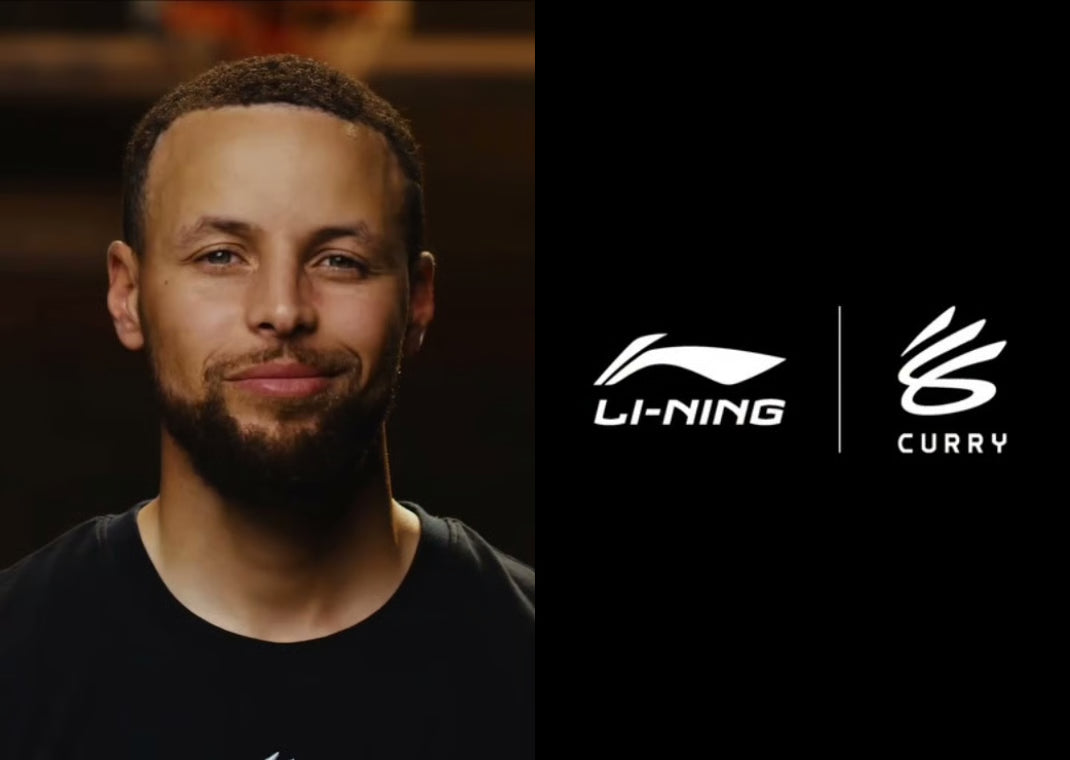
When news broke that NBA superstar Stephen Curry had signed a long term partnership with Chinese sportswear company Li-Ning, most people immediately focused on the same thing:
How much is the deal worth?
That is understandable.
For decades, athlete endorsements have been measured by contract value, shoe sales, and social media reach.
But Curry's latest deal highlights something much bigger.
The partnership reportedly includes plans for Curry Brand retail stores, athlete recruitment, product development, lifestyle apparel, golf products, and expansion across both the United States and China.

In other words, this is not just a sponsorship deal.
It is an economic development platform.
Stores create jobs.
Products create supplier opportunities.
Marketing campaigns create business opportunities.
Investments create economic activity.
The real question may not be how much Curry earns from the partnership.
The real question is:
Who else benefits?
That is the same question every athlete should be asking before signing a sponsorship agreement.
Whether you are a professional athlete, a college athlete participating in NIL, or a high school athlete signing your first local endorsement deal, every partnership creates economic impact.
The question is whether that impact can be measured within your hometown, village, city, or county.
Most athletes never ask.
They should.
Question #1
Can You Demonstrate Measurable Benefits in My Hometown?
Every company talks about community impact.
Far fewer can prove it.
Before signing a sponsorship agreement, ask:
-
How many local jobs have you created?
-
How much have you invested locally?
-
Which community organizations have benefited?
-
What measurable impact have you created in my city or region?
If a company wants access to your audience, influence, and reputation, it should be able to demonstrate value within the communities that matter most to you.
Question #2
Can You Demonstrate Measurable Opportunities for Local Businesses and Suppliers?
Every sponsorship generates spending.
The question is where that spending goes.
Ask:
-
Do you work with local businesses?
-
Do you purchase from local suppliers?
-
Can local companies participate in your projects?
-
Can you measure how much spending stays in the local economy?
Athletes often become the face of a campaign.
Local businesses should have the opportunity to participate in the economic activity that campaign creates.
Question #3
Can You Demonstrate Measurable Education and Career Opportunities for Residents?
Athletes understand the value of opportunity.
Ask whether the organization can demonstrate:
-
Internships created
-
Scholarships supported
-
Workforce training programs funded
-
Career pathways introduced
-
Mentorship opportunities provided
The best partnerships do more than market products.
They help develop people.
Question #4
Can You Demonstrate the Long Term Impact This Partnership Will Leave Behind?
This may be the most important question of all.
Years from now, people probably will not remember the exact value of a sponsorship contract.
They will remember:
-
Jobs created
-
Businesses supported
-
Students inspired
-
Opportunities expanded
-
Communities strengthened
The strongest partnerships create a legacy that extends beyond the athlete and beyond the sponsor.
The Next Evolution of NIL and Athlete Sponsorships
The first generation of athlete endorsements focused on products.
The NIL era focused on athlete compensation.
The next era will focus on measurable community impact.
Athletes are more than influencers.
They are economic development partners.
A single athlete partnership can create opportunities for workers, businesses, students, entrepreneurs, and communities.
Stephen Curry's new partnership demonstrates what is possible when athlete brands evolve into economic ecosystems.
The next generation of athletes should think the same way.
Before asking what a sponsorship will pay you, ask:
"Can you demonstrate measurable benefits and opportunities for the hometown that helped make me who I am?"
Because the most valuable sponsorships do more than build brands.
They build stronger communities.
This version creates a strong "Curry hook," introduces Local Content without sounding academic, and positions athletes as economic development stakeholders rather than just endorsers. It also naturally supports your larger Athletes Make The Best™, Sports Power Infrastructure™, and Local Content Global Networks™ narrative.


Share: